Uma Semana Decisiva
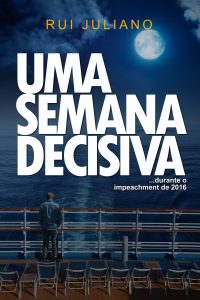
Sinopse:
Léo é um homem do tempo atual, com sessenta anos, leva vida saudável, se cuida, está solteiro depois de dois casamentos, porém se divertiu muito na vida. O personagem principal faz um cruzeiro por cinco cidades do Mediterrâneo Oriental, durante uma semana que será importante para ele, para os demais personagens da obra e os da vida real da história recente do Brasil.
Na semana decisiva de 2016, o Brasil passa por um dos momentos mais dramáticos e decisivos da política contemporânea. Nela é decidido o passo mais importante para o impeachment de Dilma Rouseff, em cenário da Lava Jato.
A trama permite mostrar o marxismo cultural, a partir do golpe de 1964, e o nascimento da nova direita, de 2013, a partir de notícias da vida real daquela semana, além de discussões sobre as bandeiras da esquerda: racismo, homofobia e feminismo.
Léo tem problemas naturais de idade e tormento afetivo interior, os quais deverão ser resolvidos por ele para que alcance a mulher com que poderá viver o resto de sua vida, enquanto contempla o turbilhão de acontecimentos na esteira de borbulhas das hélices do navio.
A raridade deste romance está no fato que é escrito com viés de tendência política de centro ou de direita, já que é difícil encontrar escritor de ficção que não seja de esquerda com o consequente direcionamento de seus pensamentos nas obras que escrevem.
Autor: Rui Juliano
ISBN: 978-85-904919-3-4
A Journal Of The Plague Year
Autor: Defoe, Daniel
Sinópse: A Journal of the Plague Year is a novel by Daniel Defoe. This novel is an account of one man’s experiences of the year 1665, in which the Great Plague or the bubonic plague struck the city of London. The book is told somewhat chronologically, though without sections or chapter headings. Presented as an eyewitness account of the events at the time, it was written in the years just prior to the book’s first publication in March 1722. Defoe was only five years old in 1665, and the book itself was published under the initials H. F. and is probably based on the journals of Defoe’s uncle, Henry Foe. In the book, Defoe goes to great pains to achieve an effect of verisimilitude, identifying specific neighborhoods, streets, and even houses in which events took place. Additionally, it provides tables of casualty figures and discusses the credibility of various accounts and anecdotes received by the narrator. The novel is often compared to the actual, contemporary accounts of the plague in the diary of Samuel Pepys. Defoe’s account, which appears to include much research, is far more systematic and detailed than Pepys’s first-person account. Whether the Journal can properly be regarded as a novel has been disputed. It was initially read as a work of non-fiction, but by the 1780s the work’s fictional status was accepted. Debate continued as to whether Defoe could be regarded as the work’s author rather than merely its editor. One modern literary critic has asserted that ‘the invented detail is small and inessential’, while Watson Nicholson – writing in 1919 – argued that the work can be regarded as ‘authentic history’. Other literary critics have argued that the work can indeed be regarded as a work of imaginative fiction, and thus can justifiably be described as a ‘historical novel’.
ISBN: 0368668460
Todos os direitos reservados – 2019 – Rui Juliano